Chemical energy is the potential of a chemical substance to change through a chemical reaction into another form of energy. Breaking or making of chemical bonds involves energy which may be either absorbed or evolved from a chemical system.
Gravitational Potential Energy
For all objects on earth has gravitational potential energy because of gravity. When gravity pull an object down to earth there is PE stored within the object.
PE = mgh (Potential Energy= mass X gravity X height)
Elastic Potential Energy
The Energy is stored within an object when it is stretch and when the object goes back to rest the energy is released
PE spring = 1/2K X2
Mechanical Kinetic Energy
The energy transformed from other sources such as chemical and potential is changed to kinetic energy when there motion. Mechanical energy can be both kinetic or potential energy. In other words, mechanical energy can be from motion or it height.
Thermal Energy
Is the part of the average temperature of a system or sample of matter that results in the change of a system's temperature. The internal energy, also often called the thermodynamic energy means that the energy is stored in the molecular structure. As temperature increase so does the electron's velocity vise verse when temperature decrease so does the electron's velocity.
Sound Energy
Ever wonder way when a force hit a surface there noise or sound coming from it? This is because sound energy is the energy produced by vibrations traveling through a medium, often the surface of something or even air.
Friday, December 10, 2010

Tuesday, November 30, 2010
321 fire
Best angle:
the best angle would be 45 degree to insure the maximum hang-time

Tight Sealing:
The cans has to be tape securely because of the potential danger of the fuel escaping thus fire then a footprint.
Mass of the base:
The mass of the base has to be as heavy as possible, because the force from the launch will have a opposite reaction (newton's 3rd law). it would be the best interest of our future if we do not misfire and hit someone.
the best angle would be 45 degree to insure the maximum hang-time
Tight Sealing:
The cans has to be tape securely because of the potential danger of the fuel escaping thus fire then a footprint.
Mass of the base:
The mass of the base has to be as heavy as possible, because the force from the launch will have a opposite reaction (newton's 3rd law). it would be the best interest of our future if we do not misfire and hit someone.
Monday, November 1, 2010
Up Down then a Loop, its a rollercoaster
In kinematics, we learn about the displacement, velocity, and acceleration. All of these variables help measure/find the distance, speed and acceleration of a object aka the roller coaster.
However also take in to conclusion Newton's 3 laws
Newton's first law: All objects will remain in a state of rest or continue to move with a constant velocity unless acted upon by an unbalanced force.However also take in to conclusion Newton's 3 laws
Newton's second law: The acceleration of an object depends inversely on its mass and directly on the unbalanced force applied to it.
Newton's third law: For every action force, there is an equal and opposite reaction force.
2 of the coolest coasters are ( I wish to ride them one day)
Underwater Roller Coaster
Vanish roller coaster at Cosmo Land in Japan unexpectedly dives into an underwater tunnel.Kingda Ka Roller Coaster
Located at Six Flags Great Adventure in New Jersey, it is the tallest and fastest roller coaster in the world. The train is launched by a hydraulic launch mechanism to 128 miles per hour (206 km/h) in 3.5 seconds.vectors (but its not for math)
thing you need to know for solving vectors
When going in one direction then going to the opposite cancels each other.
Example: you walk 5 m north then you walk 10 m south : position your 5m south
Wait wait wait that happen when you walk diagonally (basically a shortcut), think this through for a shortcut there has to be a long way right. that "shortcut" is the hypotenuse of a x and y
then is just simple SquareRoot (x2+y2)
find the adj and opp
adj = hyp*cosAngle
opp = hyp*sinAngle
opp & adj is similar to x & y
Find the hypotenuse then it angle would be opp/adj tan-1 or adj/opp tan-1
Friday, October 22, 2010
Twin graphs?

Getting ( d=v2t+1/2at² ) Equation Number 3 from a v-t graph
you need the 2 main equations. the "mother" and the "father"
The area of the Triangle can be calculated using -----> d=1/2(v2-v1)t
Rectangle can be calculated using ---> d=v2t
Combine the two ---> d=v2t + 1/2t (v1 - v2)t <-------- (-_-)
a=(v2-v1) / t or at=V2-v1 <--------- (^_^)
Sub (^_^) into (-_-) to form
d=1/2t(v2-v1)+v2t
=1/2t(at)+v2t
=v2t + 1/2at²

The area of the Triangle can be
calculated using -----> d=1/2(v2-v1)t
Large Rectangle can be calculated using ---> d=v2t
Therefore the imagery triangle minus the large Rectangle
d=V1t-1/2t(v2-v1)
=V1t-1/2t(at)
=v1t - 1/2at²

Tuesday, October 12, 2010
Matching graphs

You stay as 1m for 1 second then you walk at constant pace for 2 seconds way from origin then toward the origin for 1s then stop at 1.7-1.8m. [1]
 |
| start at 3m then you walk at constant pace for 3 second; stop at 1.5m for 1s, sprint to the origin for second, stop at 0.5m for 2s then run away from origin[2] |

 | |
| Stay for 2 seconds; move at a constant pace for 2 seconds, stop for 2 seconds then walk at constant speed [3] |

 |
| This in a velocity time graph. in this graph you walk backward then you speeding up , then you walk a a constant pace in the same direction. you walk forward at a constant pace then you stop. [4] |

 |
| Start at 0.8m move at constant speed for 3.75s, tops for 2.5s the runs 3.25s [5] |

 | ||||||||||||||||
| You walk backwards for 3s then forward at a constant pace for another 3 second then you stop. [6] |

[1]
+v-t.jpg) If this was a a-t graph it would be a straight line on the x-axis because there was no acceleration
If this was a a-t graph it would be a straight line on the x-axis because there was no acceleration
[2]
+v-t.jpg) If this was a a-t graph it would be a straight line on the x-axis because there was no acceleration
If this was a a-t graph it would be a straight line on the x-axis because there was no acceleration
[3] If this was a d-t graph. It would be then a line on the x-axis then a straight line at an angle going up then a line on the x-axis then a straight line at an angle going down (stops at the origin)
If this was a a-t graph it would be a straight line on the x-axis because there was no acceleration
[4]
v-t.jpg) If this was a a-t graph there would be a positive horizontal line an a straight line on the x-axis because there was no acceleration afterward
If this was a a-t graph there would be a positive horizontal line an a straight line on the x-axis because there was no acceleration afterward
[5] If this was a v-t graph A positive horizontal line, then a line on the x-axis then a positive horizontal line
If this was a a-t graph it would be a straight line on the x-axis because there was no acceleration
[6] If this was a d-t graph. It would be a straight line at an angle going up then a straight line at an angle going down.
If this was a a-t graph it would be a straight line on the x-axis because there was no acceleration
[2]
If this was a a-t graph it would be a straight line on the x-axis because there was no acceleration [3] If this was a d-t graph. It would be then a line on the x-axis then a straight line at an angle going up then a line on the x-axis then a straight line at an angle going down (stops at the origin)
If this was a a-t graph it would be a straight line on the x-axis because there was no acceleration
[4]
If this was a a-t graph there would be a positive horizontal line an a straight line on the x-axis because there was no acceleration afterward[5] If this was a v-t graph A positive horizontal line, then a line on the x-axis then a positive horizontal line
If this was a a-t graph it would be a straight line on the x-axis because there was no acceleration
[6] If this was a d-t graph. It would be a straight line at an angle going up then a straight line at an angle going down.
If this was a a-t graph it would be a straight line on the x-axis because there was no acceleration
Saturday, October 2, 2010
Motor; spin and burn
On Thursday 30th the whole class walked in the room in hopes that their motor will spin 3 time (1080 degrees). We all brought in supplies such as paper clip, wood, soda cans, and nail for what we couldn't bring Mr.Chung kindly brought such as the hammers and corks.
I started off by hammering the four nails in to the plank of wood with the distance of 4 cm apart while my partner Lena sanded the soda cans to perfection.
After I finished with the hammering, I try to make the axle by sticking a kabob stick through the cork. At first it seemed easy until the point where the stick reach the middle of the cork and it wouldn' move after snapping 2 kabob sticks i found out that you first use a nail fist to make a hole, finally on the third try i successful finish make the axle and Lena finished sanding the soda can strip and making the base for the axle to rotate on.
Then my panther started warping the copper wire around the cork while I was making the base more secure.
There we are finished and only need to test it out.
Test number one (not really) : Rejected do the the wires not being parallel to the commutator pins.
Test number one : failed commutator pins were too close to the cork.
Test number two :Unknown
Overall I gained valuable knowledge of where my mistakes were and how to avoid them in the future.
I started off by hammering the four nails in to the plank of wood with the distance of 4 cm apart while my partner Lena sanded the soda cans to perfection.
After I finished with the hammering, I try to make the axle by sticking a kabob stick through the cork. At first it seemed easy until the point where the stick reach the middle of the cork and it wouldn' move after snapping 2 kabob sticks i found out that you first use a nail fist to make a hole, finally on the third try i successful finish make the axle and Lena finished sanding the soda can strip and making the base for the axle to rotate on.
Then my panther started warping the copper wire around the cork while I was making the base more secure.
There we are finished and only need to test it out.
Test number one (not really) : Rejected do the the wires not being parallel to the commutator pins.
Test number one : failed commutator pins were too close to the cork.
Test number two :Unknown
Overall I gained valuable knowledge of where my mistakes were and how to avoid them in the future.
Tuesday, September 28, 2010
Magnetic field and the right hand rule !-@ (1-2)
A magnetic field is the distribution of a magnetic force around a magnet.

similar poles repel similar - - (2 negative)and ++ (2 positive)
opposite poles attract (+ - )
the general direction is from the north end to the south
Magnetic Field
distribution of a magnetic force in the region of a magnet
Earth's magnetic field is produced because of a flow of hot liquid metals inside Earth
Ferromagnetic metals have atomic structure that seems to make them strongly magnetic
Domain Theory of magnets : Large magnets are made up of small and rotating magnets, called dipoles
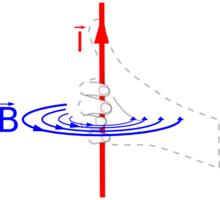
Oersted's Principle : Charge moving through a conductor produces a circular magnetic field around the conductor
First right-hand rule for conductors
Grasp conductor with the thumb of the right hand pointing in the direction of current. The finger tips is direction of the magnetic field around the conductor. (1)
distribution of a magnetic force in the region of a magnet
Earth's magnetic field is produced because of a flow of hot liquid metals inside Earth
Ferromagnetic metals have atomic structure that seems to make them strongly magnetic
Domain Theory of magnets : Large magnets are made up of small and rotating magnets, called dipoles
Oersted's Principle : Charge moving through a conductor produces a circular magnetic field around the conductor
First right-hand rule for conductors
Grasp conductor with the thumb of the right hand pointing in the direction of current. The finger tips is direction of the magnetic field around the conductor. (1)
Second right-hand rule for coils (1) >>>
Grasp the coiled conductor with the right hand such that the four fingers point to the current flow. The thumb points in the direction of the magnetic field within the coil. Outside the coil, the thumb represents the north.
Grasp the coiled conductor with the right hand such that the four fingers point to the current flow. The thumb points in the direction of the magnetic field within the coil. Outside the coil, the thumb represents the north.
Tuesday, September 14, 2010
Ohm's Law
Definition and calculation
 Resistance is the measure of the opposition to the current flow.
you can calculate to resistance using the formula R=V/I, resistance = voltage (volts) / current (ampere)
Factor that determine Resistance
-thinner wires have a greater resistance then larger wires
-temperature
-marterial
-length
-cross-sectional area
Kirchhoff's laws
Kirchhoff's current law; The total amount of current that flows in to a point of a circuit the same amount comes out.
kirchhoff's voltage law: The total of all decrease in voltage will be gained back in the circuit loop.
Therefore his law states that in any circuit there is no gain or loss in charge.
Resistance is the measure of the opposition to the current flow.you can calculate to resistance using the formula R=V/I, resistance = voltage (volts) / current (ampere)
Factor that determine Resistance
-thinner wires have a greater resistance then larger wires
-temperature
-marterial
-length
-cross-sectional area
Kirchhoff's laws
Kirchhoff's current law; The total amount of current that flows in to a point of a circuit the same amount comes out.
kirchhoff's voltage law: The total of all decrease in voltage will be gained back in the circuit loop.
Therefore his law states that in any circuit there is no gain or loss in charge.
Monday, September 13, 2010
chart of voltage, current, resistance (is futile) and power
| Voltage | V | volts | The energy between 2 points at one point in time. |
| Current | I | Ampere | The flow of electric charge over a period of time. |
| Resistance | R | ohm | The measure of the opposition to current flow. |
| Power | P | Watts | The rate at which work is done. |
Saturday, September 11, 2010
Who knew that a ping pong ball would be worth so much
Basically on Friday 10, 2010 we got in to group of fours and experimented with $600 ping pong balls or so Mr.Chung says.
Question and Answers
1. Can you make the energy ball work?
A: Yes
What did think makes the ball hum and flash.
A: When placing two fingers on the metal strips the ball will hum and flash?
2. Why do you have to touch both metal strip for the ball to work?
A: you need to connect the strips of medal to getter for the charge to pass through your fingers.
3. Will the ball light up if you connect it with any other materials
 A: Only if you use materials that can conduct electricity.
4. What material can be used?
A: -copper
-lead
-skin tissues
- Basically any conductible materials.
5. Why does this not work on certain individuals?
A: If the person was wear a insulator like material such as rubber or leather glove.
6. Can you make the energy ball work with 5-6 individuals in your group? Will it work with the entire class?
Yes and yes, as long as all individuals are connected.
 10. Does it matter who lets go?
Question and Answers
1. Can you make the energy ball work?
A: Yes
What did think makes the ball hum and flash.
A: When placing two fingers on the metal strips the ball will hum and flash?
2. Why do you have to touch both metal strip for the ball to work?
A: you need to connect the strips of medal to getter for the charge to pass through your fingers.
3. Will the ball light up if you connect it with any other materials
A: Only if you use materials that can conduct electricity. 4. What material can be used?
A: -copper
-lead
-skin tissues
- Basically any conductible materials.
5. Why does this not work on certain individuals?
A: If the person was wear a insulator like material such as rubber or leather glove.
6. Can you make the energy ball work with 5-6 individuals in your group? Will it work with the entire class?
Yes and yes, as long as all individuals are connected.
7. What kind of a circuit can you form with one energy ball?
A: Series circuit
8. Given two balls (combine two groups): can you create a circuit where both balls light up?
A:Yes, by forming a parallel circuit.
9. What do you think will happen if one person lets go of the other person’s hand and why?
A: The energy will stop working because there will be a gap in the connector. Thus there won't be a current of charge passing through the load ( red light bulb and the speakers)
10. Does it matter who lets go? A: no it does not matter who let go as long as the a missing link the energy ball(s) will not work.
11. Can you create a circuit where only one ball lights (both balls must be included in the circuit)?
A: Yes, if we use a parallel circuit and have a switch like the image to the right
12. What is the minimum number of people required to complete this?
A: 3 people.
Parallel or Series
A circuit made of connections in sequence is known as a series circuit where as parallel circuits are connected completely parallel to one another.
Parallel or Series
A circuit made of connections in sequence is known as a series circuit where as parallel circuits are connected completely parallel to one another.
Friday, September 10, 2010
Can Superman Jump Over This?
Summary
On the second day of physics class we were given a challenge to create the highest structure among 7-8 groups, and through this activity we became more knowledgeable on some of the physics required to create tall and stable buildings.
We were given 20 minutes to create, design and build the tallest structure possible without it falling over. wihtin our group the most challenging part would be the designing. Our structure i think did pretty good, it wasn't the highest but not the shortest or the most unstable.
 physic
Thin structures are usually lighter.
Support legs to balance the structure.
More weight/mass on the base.
As you go higher there's usually a gradual decrease in size.
Symmetrical structures are more stable.
Stable?
On the second day of physics class we were given a challenge to create the highest structure among 7-8 groups, and through this activity we became more knowledgeable on some of the physics required to create tall and stable buildings.
We were given 20 minutes to create, design and build the tallest structure possible without it falling over. wihtin our group the most challenging part would be the designing. Our structure i think did pretty good, it wasn't the highest but not the shortest or the most unstable.
physicThin structures are usually lighter.
Support legs to balance the structure.
More weight/mass on the base.
As you go higher there's usually a gradual decrease in size.
Symmetrical structures are more stable.
Stable?
Some things that determine how stable a building can be would be its mass and weight. Most of the weight should be on the bottom of the structure. Or to make the top as light as possible. Have support at the bottom of the structure helps and have something holding the supports is a important factor as well. The build has to be symmetrical to have a good center of gravity.
Center of Gravity
The center of gravity is when an object is divided in half and both side has the some mass. For example skyscraper need to have good center of gravity to be stable. o if you were to divide a skyscraper in half both side has to be symmetrical to another.
Wednesday, September 8, 2010
Intro to Current Electricty P.544-552
Current
-Current is the flow of negatively charged elections push away of each other.
 - By using the formula (to the left) you can calculate the current.
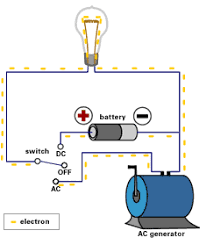
-Some original forms of energy can be chemical, mechanical (windmills or hydro dams), light (solar) or thermal (heat) energy.
-Current is the flow of negatively charged elections push away of each other.
- By using the formula (to the left) you can calculate the current. I is the current in amperes (A), Q is the charge in coulombs (C) and t stands for time.
- Alternating current : A current that is continuously moving in different directions- Direct current : A current that only goes in a single direction, from the power supply to the load and back.
-Circuit: The path (cycle) where the electric current starts from the negative side then continuing to the positive side this is called electric current; it can also go the other way around, from positive to negative which is called conventional current. P.S Conventional current is what we're using at school.

Electrical Potential
- Work is done by the energy supply to increase the energy potential from a present to a higher value for every charge of coulomb and as the charge pass the load the energy potential will decrease as the energy is spent.
- Electric potential difference or known as voltage (V) is the electrical potential energy in each coulomb of charge in a circuit.
- Voltage or electric potential difference can be calculated by using the formula V=E/Q or
energy required to increase the electric potential
electric potential difference = charge in coulombs
Supplying
-Electrical energy always start off as another form of energy, however though the use of conversion device we can take that original energy and turn it in to energy used to power of electronics
-Some original forms of energy can be chemical, mechanical (windmills or hydro dams), light (solar) or thermal (heat) energy.
Subscribe to:
Comments (Atom)